01 / UX RESEARCH · UX/UI · WEARABLE TECHNOLOGY · CASE STUDY
NEXTSENSE
A longitudinal research study exploring how people interact with NextSense's wearable technology across meditation, sleep, and everyday use.
MY ROLE
UX Researcher · Participant
PROJECT TYPE
Consultation
01 / OVERVIEW
The Challenge
FROM
FRUSTRATION
TO INSIGHT
TOOLS
Figma · Adobe CC
Users were expressing clear issues and frustrations with the product, making it possible to identify what needed improvement. What was missing was a deeper understanding of what users actually needed from the experience and how those needs should shape design decisions.
I approached the project from two perspectives: as a UX researcher studying the experience and as a participant using the product over time.
02 / MY APPROACH
Research with Context
TIMELINE
4 Weeks
Research → Testing → Insights → Recommendations → Design Research
03 / RESEARCH
Understanding
the Experience
I conducted a 15-day longitudinal study to examine how a user interacted with the product over time, rather than relying on a single testing session. The study included diary entries, observation, and usability testing.
15
Day Longitudinal Study
Following the experience across real-world use helped reveal patterns that would have been difficult to identify through a single usability session.
01
Diary Study
Users log their real-world thoughts, actions, and feelings over several days or weeks.
03
Observation
Observing interactions with a product or completing tasks in real time without interviewing.
04 / KEY INSIGHTS
What I Found
01
02
07 / OUTCOME
What Changed
02
User Research
Studying users to understand their needs, behaviors, pain points, and motivation.
04
Usability Testing
Evaluating how easily users can complete tasks and identifying moments of confusion, friction, or success.
Fit affects the entire experience.
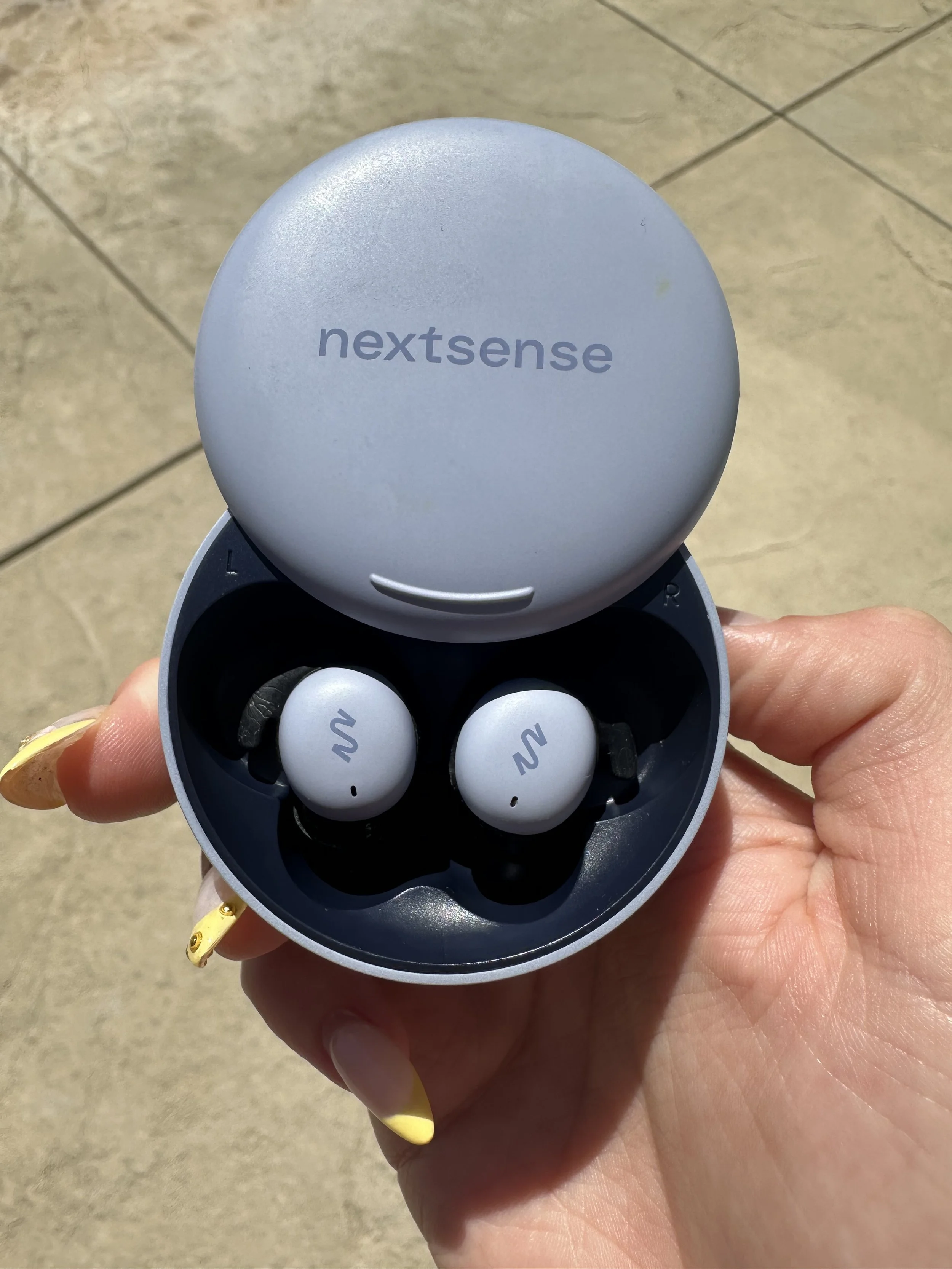
User comfort and the earbuds' ability to stay securely in place affected both the overall experience and the reliability of the data being collected.
Meditation created a more consistent experience
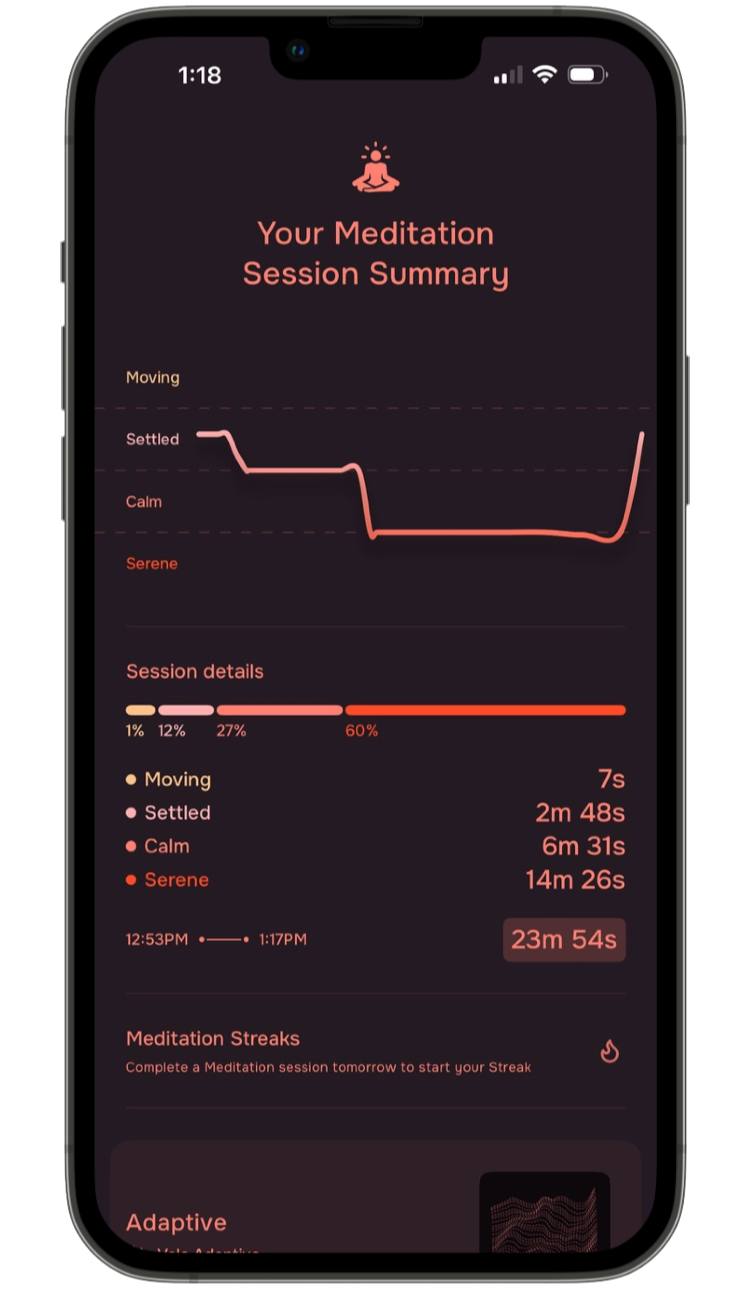
Meditation sessions generally felt calming, and adaptive audio helped create a more immersive experience. However, technical glitches could quickly interrupt that sense of immersion.
03
Sleep presented different challenges
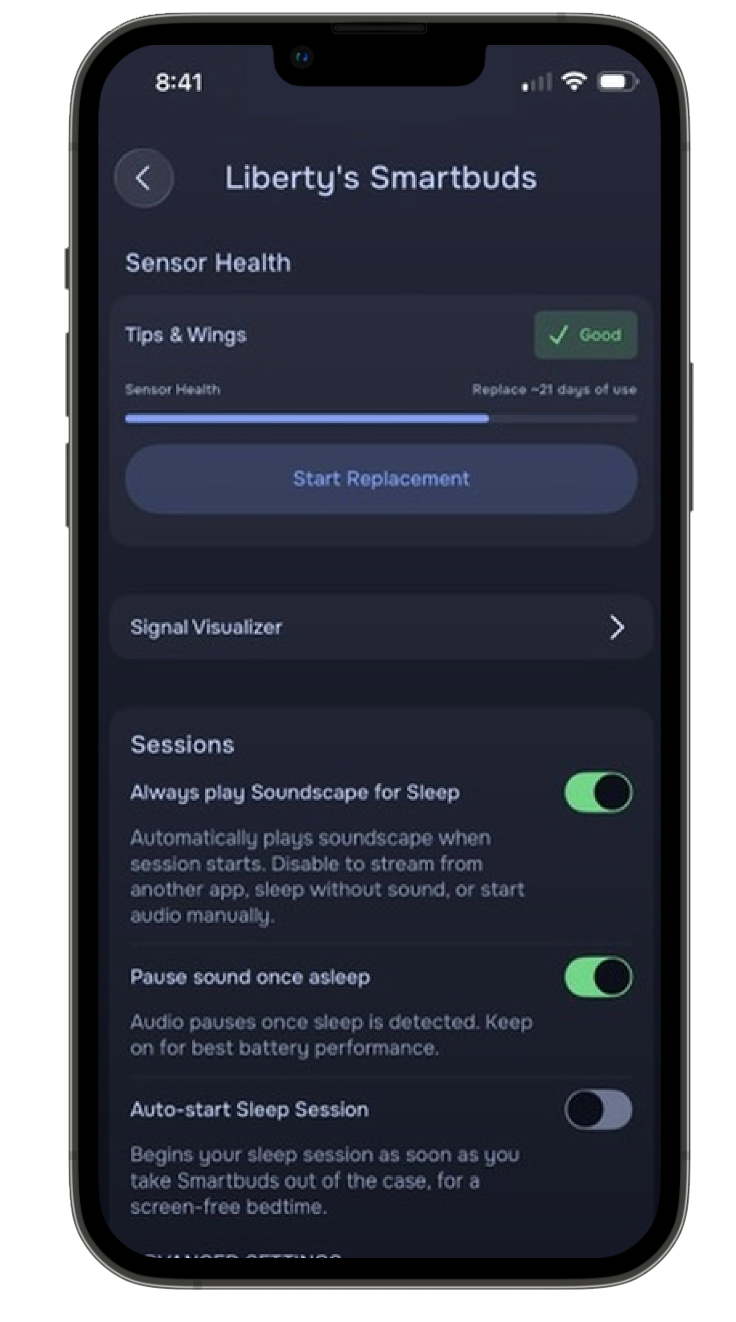
Compared with meditation, sleep experiences were less reliable. Earbuds could shift or fall out, signal quality could decrease, and some features disrupted sleep rather than supporting it.
05 / DESIGN OPPORTUNITY
Turning Insights Into Opportunities
Based on the research, I identified three areas where the experience could be improved.
01
Simplify
Make user data easier to understand and interpret.
Research → Direction
02
Guide
Help users trust that their data and sessions are being recorded accurately.
08 / TAKEAWAY
What I Learned
Context Matters!
The project taught me how much context matters when designing for wellness technology. Research helped me move beyond designing what looked intuitive and instead design around what users actually needed.
NextSense was eager to see the report, and the project gave me the opportunity to become a superuser and self-starter throughout the study.
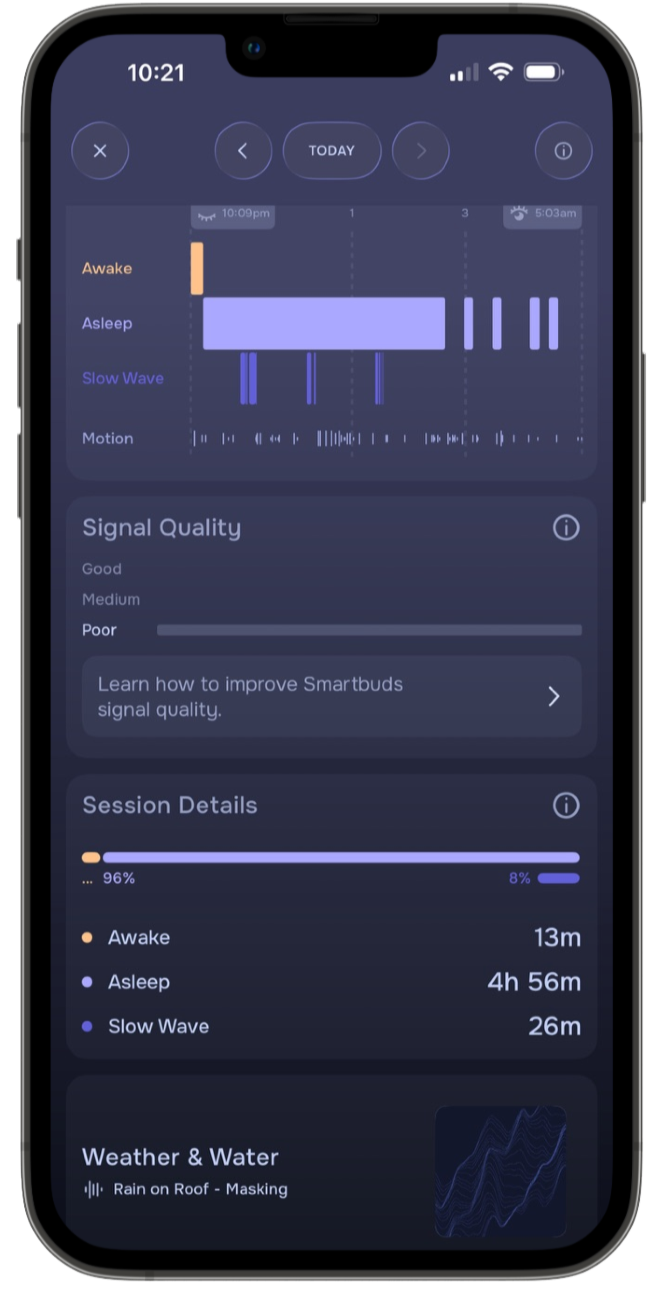
03
Personalize
Help users discover sessions and understand which wearable fit works best for them.
6 / FINAL DESIGN
Designing from the Research
06 / FINAL DESIGN
Designing from the Research
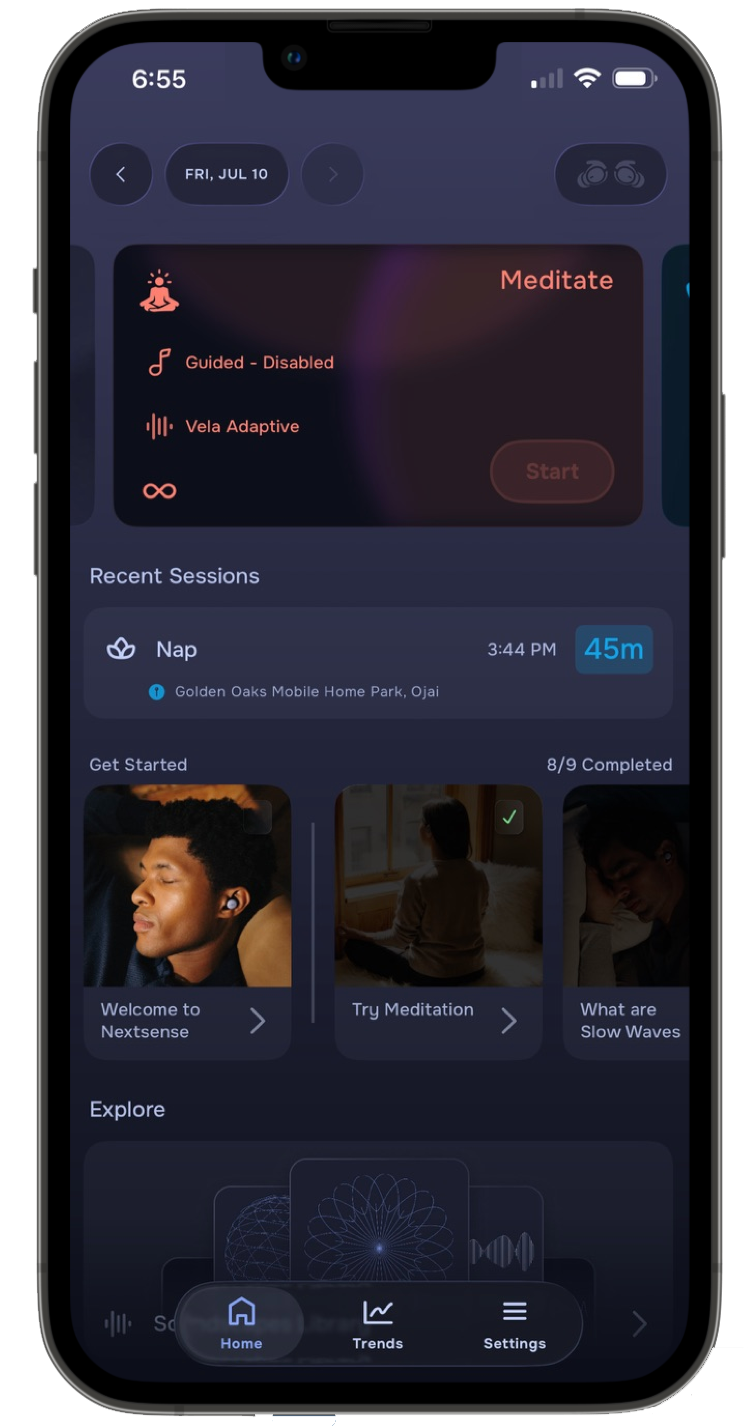
The research informed recommendations for how users could better understand their data, navigate sessions, and build confidence in the wearable experience.
01
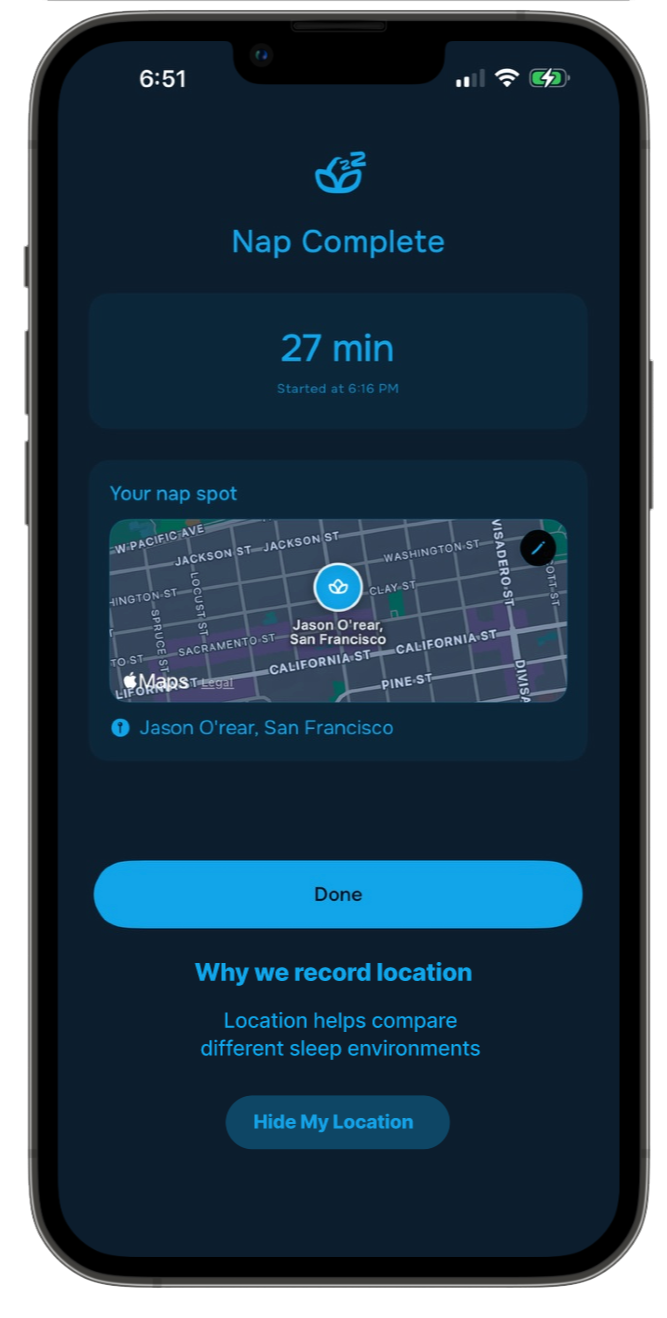
NAP SESSION
02
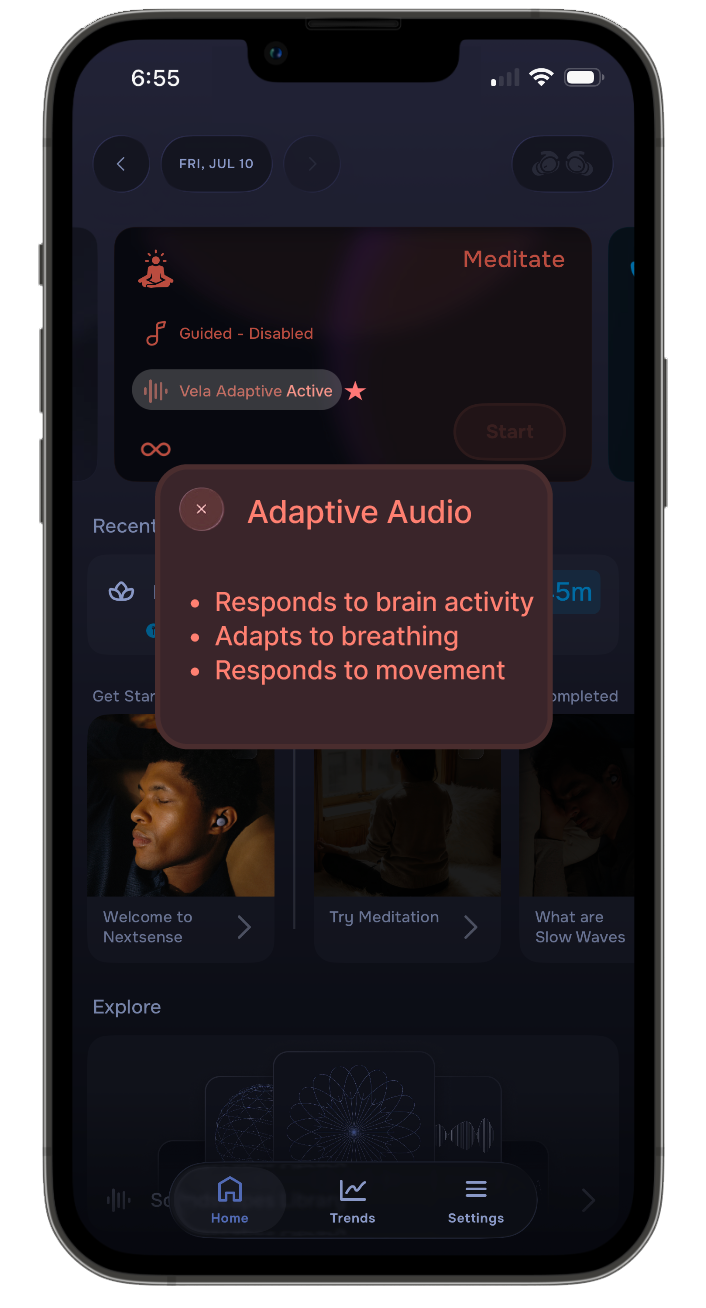
MEDITATION
03
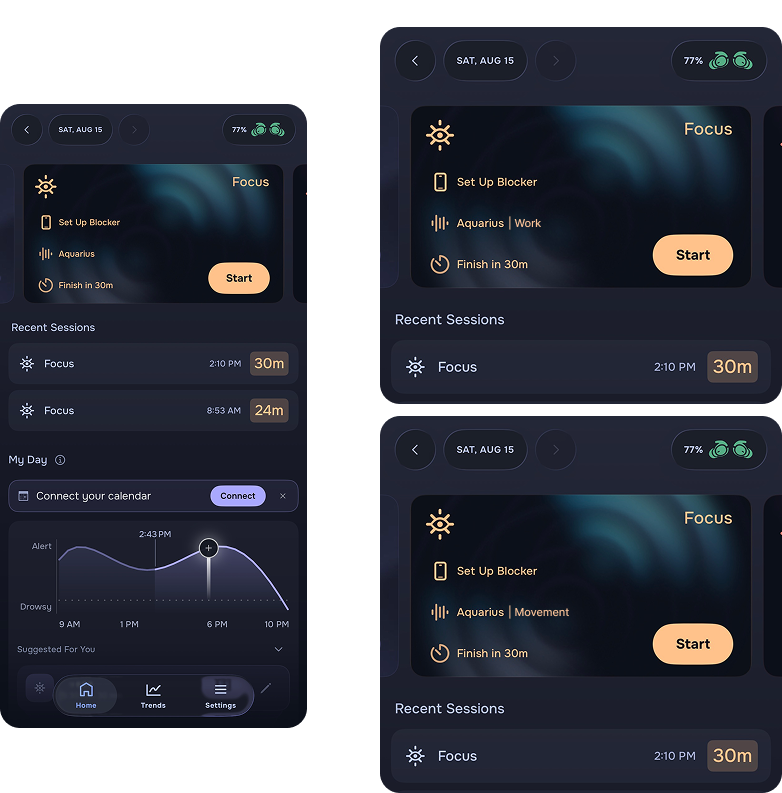
FOCUS
The research surfaced key opportunities to improve the way users understand and interact with their wearable data, informing recommendations for future product development. I became updated with the redesigned features.
What I’d Explore Next!
If I continued the project, I would test the redesigned experience with a larger group of users and explore how personalization could improve long-term engagement.
I would also continue testing newer product features and gathering UX feedback to evaluate how the experience evolves over time.
NEXTSENSE / 01